After Milford Sound, we continued north. Wanaka and Aoraki / Mount Cook couldn’t be more different, moving from the water and rainforest to a more arid, alpine environment. Both shared one similar trait, however, of deserving more time than we were able to give them.
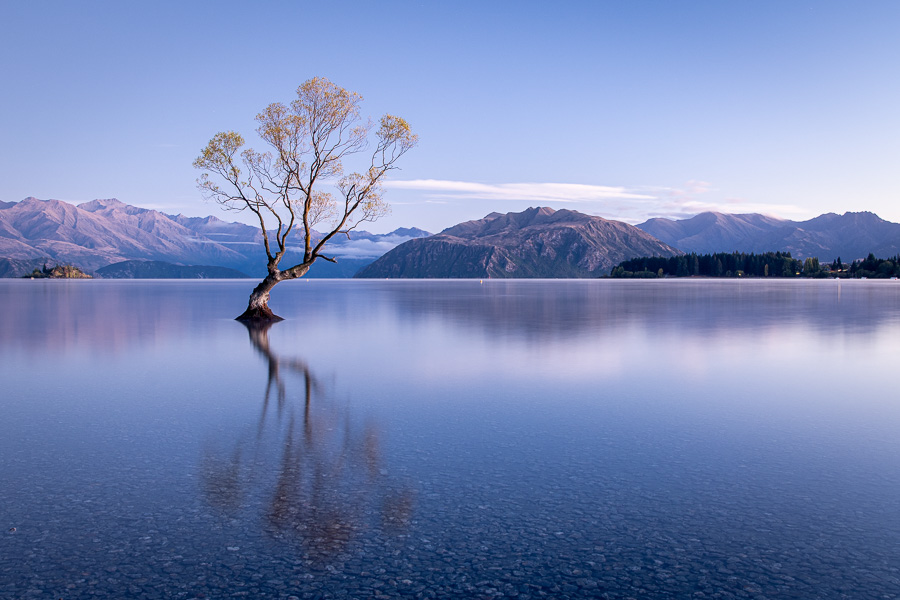
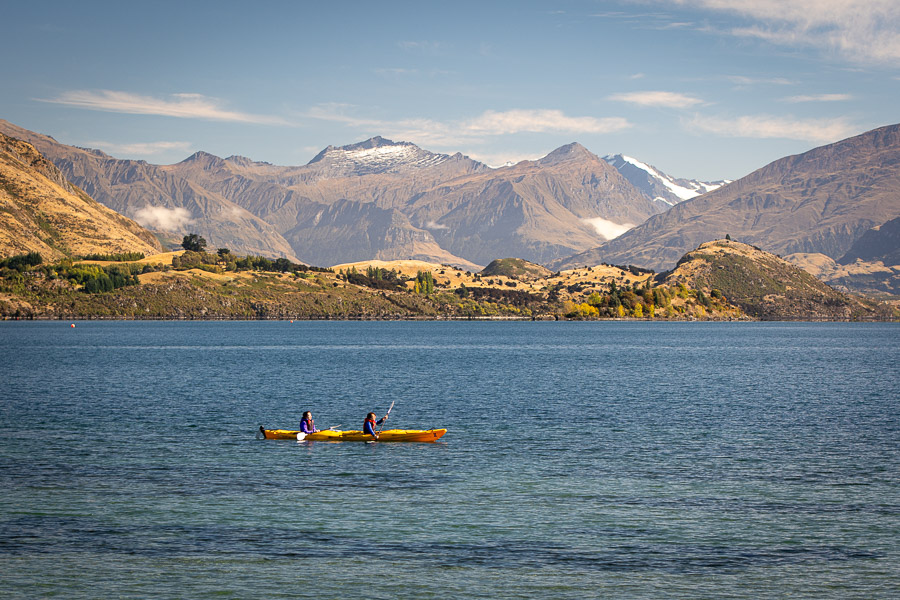
Wanaka is a relaxed lakeside town best known for a single willow tree growing just offshore (more on that below). It’s one of New Zealand’s most photographed scenes, but its simple composition and distinctive lean make it easy to understand why.
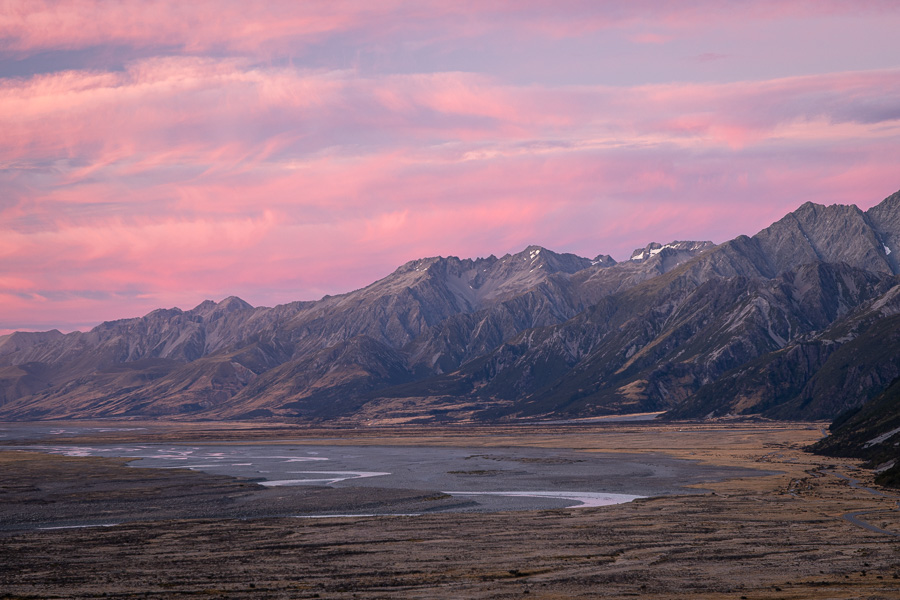
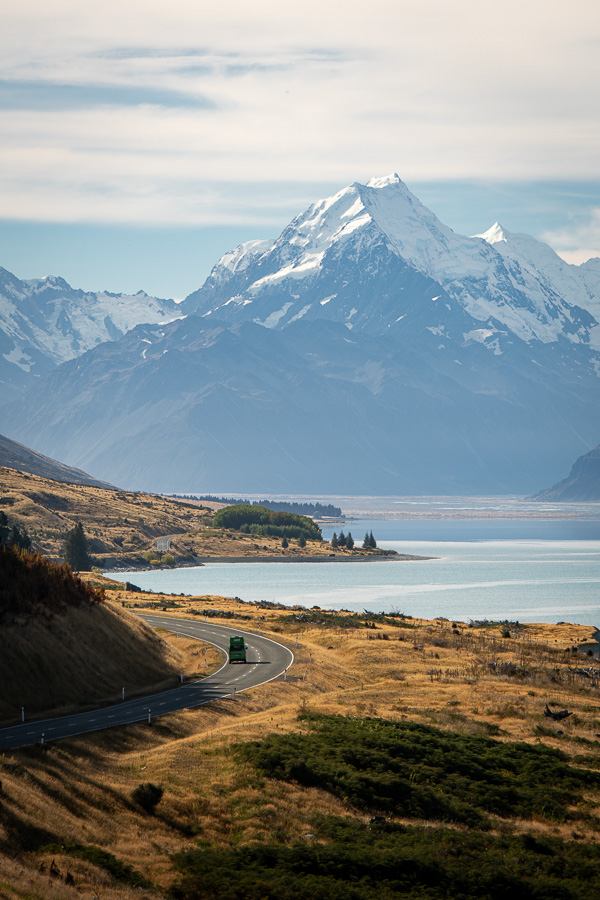
From Wanaka, we made our way toward Aoraki / Mount Cook National Park. (Aoraki is the traditional Māori name, meaning “cloud piercer.” It is common in NZ for peaks to have dual names.) The drive alone is beautiful and, if I may, reminded us at times of our home state of Colorado. By the time we arrived, we were greeted with something that’s surprisingly rare in this part of New Zealand: several days of clear skies.
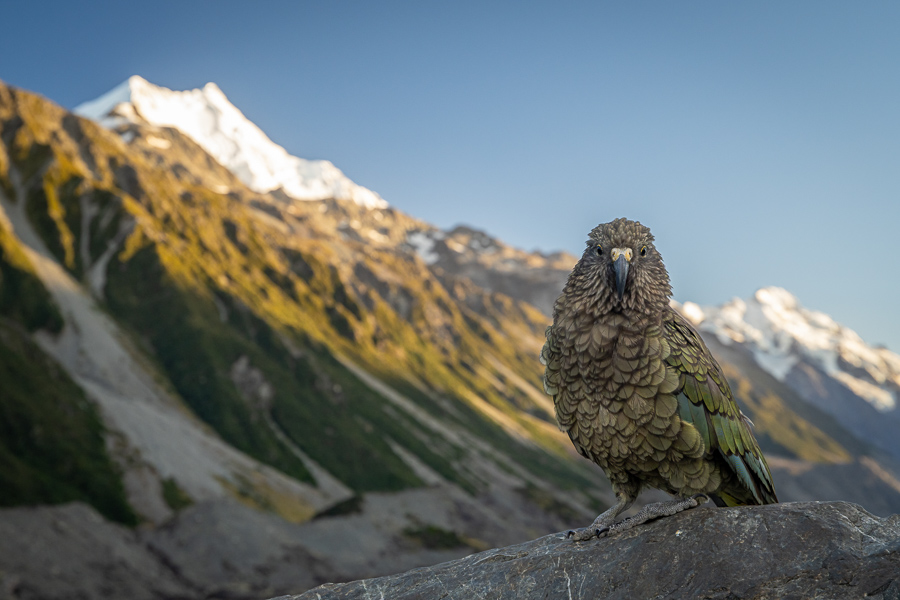
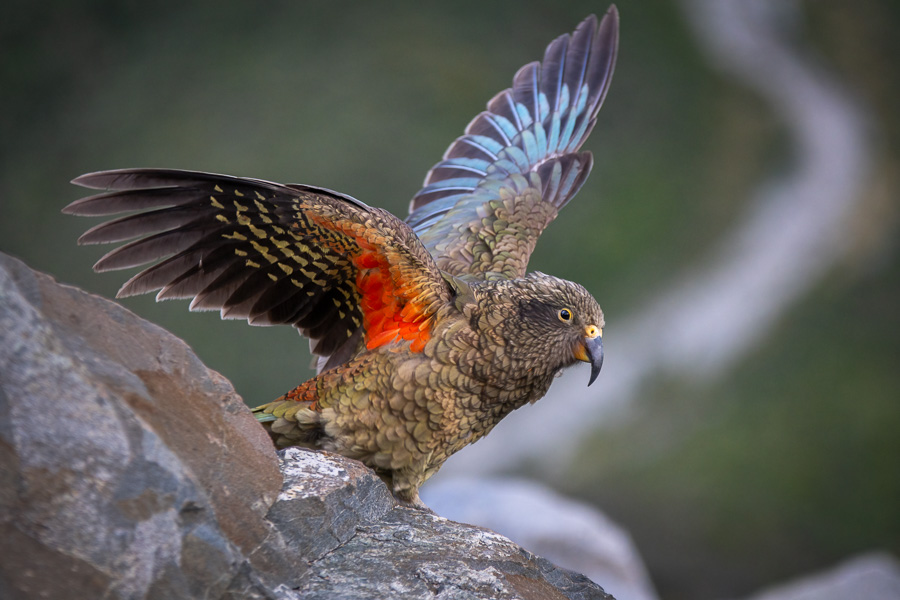
Over the next few days, we hiked near New Zealand’s highest peak and hoped to spot a Kea, the world’s only alpine parrot and an endemic species found only in New Zealand’s South Island.
Up to that point in the trip, we hadn’t seen a single Kea, and I had started to think we’d missed our chance. But then…early on our last morning, while waiting for sunrise at a lookout, I kept hearing an unfamiliar bird call nearby but couldn’t see where it was coming from. As the light slowly improved, I finally spotted one kea. Then another. And another. I think there were seven in total.
Kea are famously curious birds with a particular fondness for chewing on anything soft. In my case, that meant the foam grips on my trekking poles, which I’d conveniently left leaning against a nearby rock. Within minutes, they had claimed them as their own, tossing them around and happily taking bites out of the grips. I was especially thankful that my camera bag was still on my back. Fortunately, they stuck around long enough for there to be enough light for photographs. I figured it was the least they could do after chewing up my trekking poles.
All photos from March & April 2026.
Sign up for my newsletter and never miss a post. Learn more and sign up here.